Assess Your Space
A small kitchen can feel cramped and frustrating, but with a few smart moves you can transform it into a functional, efficient workspace. The key is to design around how you actually cook and store, not around the size of the room. Start with a plan that respects traffic flow, maximizes vertical space, and makes every inch count. The good news is that you can achieve major gains with a mix of modular storage, thoughtful labeling, and affordable accessories from established retailers.
Begin with a quick audit of the space. Measure the width, depth, and height of the area, noting any obstacles like a door swing, radiator, or under cabinet lighting. Jot down how you currently use the kitchen, what items are essential, and what you often reach for during peak cooking times. This snapshot will guide where to place zones for cooking, prep, cleaning, and storage. In a small kitchen, there should be a clear sequence from fridge to sink to cooking surface, with the least amount of backtracking possible. If the layout feels awkward, consider light rearrangements like moving a compact cart or rethinking the location of the trash and recycling bins to free up counter space.
Zone Planning
Zone planning is the backbone of organization. Create four primary zones: prep, cooking, cleaning, and storage. The prep zone should live near the fridge and sink, with a cutting board, sharp knife, and frequently used utensils within easy reach. The cooking zone should hold pots, pans, lids, and heat-safe tools close to the stove or range. The cleaning zone groups dishware, detergent, sponges, and a place to dry or stack dishes. The storage zone contains dry goods, canned items, and bulk containers. In a tight kitchen, you’ll often merge zones by using wall space and doors; this is where vertical storage, hanging rails, and door-mounted organizers earn their keep.
Maximize Vertical Space and Door Storage
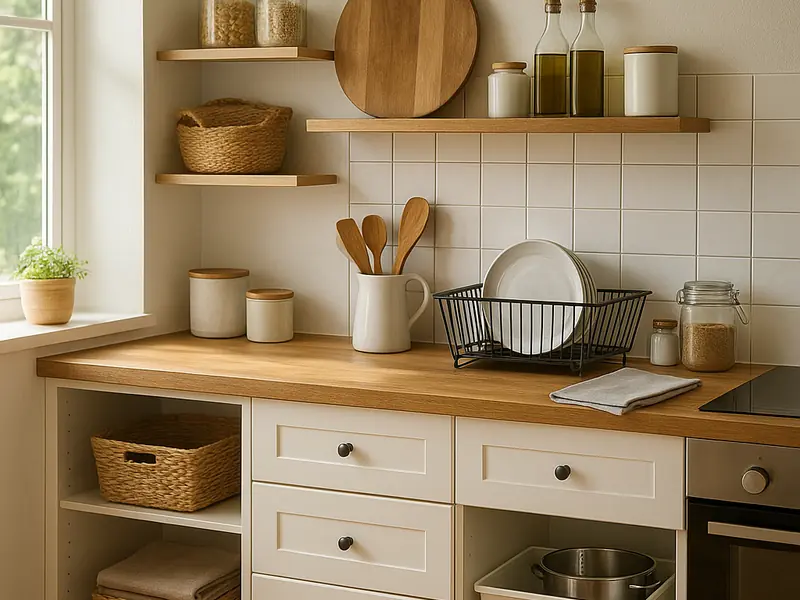
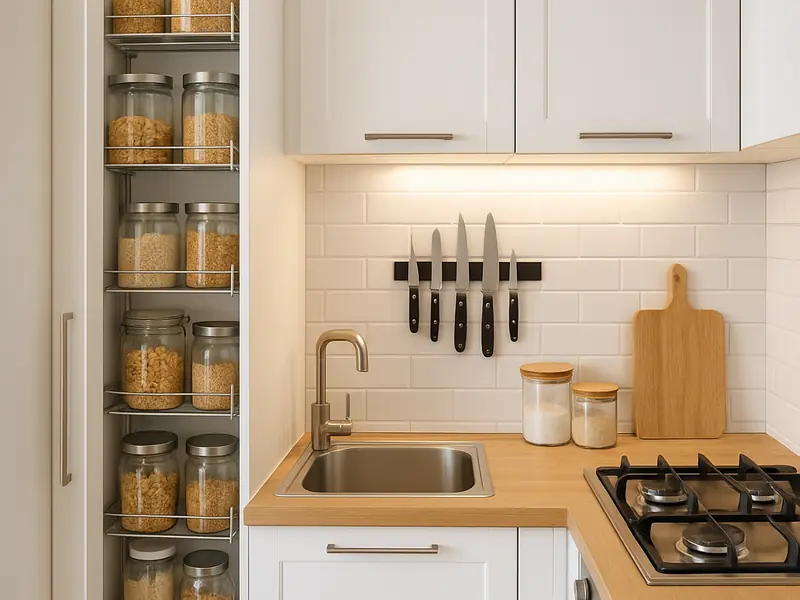
Maximize vertical space and door storage. Wall mounted shelves or pegboards can free counter space while keeping frequently used items accessible. A magnetic knife strip frees drawer space and adds a visual cue to where tools live. Over the cabinet doors, install slim spice racks, pan racks, or small rack organizers so lids and spices don’t creep into a drawer or into a pile on the counter. Tall, narrow pantry solutions can be a lifesaver in shallow kitchens, especially pull out shelves or slim rolling organizers that slide in beside the fridge. If you have a dishwasher or washing machine, a recessed or toe kick drawer can tuck away detergents and cleaning supplies while staying out of sight.
Choose Modular Systems
- The Container Store with Elfa systems offers highly customizable wire shelving, pull out baskets, and integrated drawer units that can be configured to suit a small kitchen. While premium, the system is designed for frequent reconfiguration and long life.
- Ikea provides budget friendly SEKTION kitchen components and a wide range of organizers including pull out trays, drawer dividers, and modular inserts. It’s known for ease of assembly and broad availability, which translates into quick replacements and easy upgrades.
- Wayfair and Amazon provide vast selections of pantry organizers, inserts, and shelf risers from numerous brands. They’re excellent for comparing prices and reading user reviews, though product quality can vary, so reading descriptions and reviews carefully is important.
- Home Depot or Lowe’s carry pantry and cabinet organizers, wire shelving, and specialty storage options. They are practical for in store shopping, quick pickup, and often offer installation services for larger setups.
- For a more premium experience, professional organizers or design services like The Home Edit or local space planning consultants can create a tailored plan and source custom or semi custom storage.
When selecting products, prioritize items that are adjustable, easy to clean, and sized to your shelves and doors. Pull out pantry organizers leverage narrow spaces, while clear containers help you see contents at a glance. Drawer organizers with multiple compartments keep utensils orderly, while tiered shelves increase visibility for canned goods. Labeling is not just about aesthetics; it reduces the time you spend searching for items and helps with restocking. Use uniform jars for dry goods to create a neat, cohesive look that also makes inventory checks simple.
Implementation, Shopping, and Final Thoughts
A practical implementation plan helps you stay on track. Start by decluttering the space: remove items you rarely use, donate duplicates, and consolidate like with like. Then, install or adjust the most impactful features first: vertical storage on a blank wall, a pull out pantry if possible, and door mounted organizers for spices or lids. Next, outfit each zone with purpose built tools: a compact cutting board, a set of sharp knives in a slim block or magnetic strip, a couple of reusable storage containers that stack neatly, and a trash/recycling strategy that minimizes noise and clutter. Finally, refine the setup by testing your flow during real cooking sessions. If you find yourself crossing the kitchen too often or piling items on the counter, revisit your zoning or add a small rolling cart to keep essential tools within arm’s reach.
For shopping and budgeting, a staged approach helps. Begin with a few key upgrades like a pull out pantry, a set of clear canisters, and a couple of drawer dividers. If you’re starting from scratch, compare a modular system from Ikea with a premium approach from The Container Store to determine what level of customization you’re comfortable with. If you already own furniture, you can mix and match with budget friendly inserts from Wayfair or Home Depot to fill gaps without overhauling the entire space. And if you crave a professional touch, a local organizer can translate your audit into a detailed layout plan, from which you can source exact products to fit your space.
In the end, organization is less about potions and more about habit. A small kitchen rewards a consistent routine: weekly quick audits, a fixed spot for every tool, and a “one in one out” rule for gadgets and gadgets that multiply when left unchecked. With the right combination of shelves, drawers, and smart storage, a compact kitchen can feel surprisingly generous, efficient, and even a little inspiring.