
Overview
A cast iron skillet is a kitchen workhorse that can last generations when cared for properly. Cleaning it is not about scrubbing away something wrong but about maintaining a resilient layer of seasoning that protects the pan and flavors future meals. With the right routine, you can clean quickly, prevent rust, and keep your skillet performing like new.
Start with a light everyday clean
- After you finish cooking, let the skillet cool until it is warm but not scorching hot.
- Rinse under hot water to loosen food particles, then use a stiff brush or a nonmetal scrub pad to lift residue.
- If the skillet is not heavily soiled, a quick rinse and scrub is all you need.
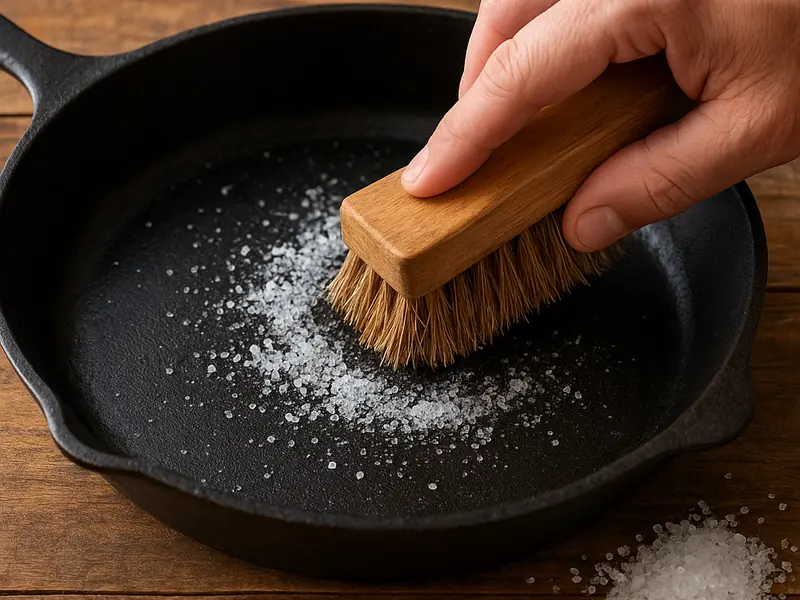
- For stubborn bits, sprinkle a small amount of coarse salt into the pan and scrub with the salt as an abrasive.
- The salt acts as a gentle scouring agent without stripping away too much of the seasoned surface.
- If you own an enamel coated cast iron pan from brands like Le Creuset or Staub, you can use a mild dish soap and a nonabrasive sponge if needed, though many cooks still prefer to avoid soap with bare seasoning.
- Dry the pan thoroughly right away; you can set it on a warm burner for a few minutes or wipe with a cloth and then air dry.
- A completely dry surface is essential to prevent rust.
The important follow-up is to recoat and heat
- When the pan is dry, apply a thin film of high-smoke-point oil, such as flaxseed, canola, or vegetable oil.
- Wipe away any excess so the surface is just lightly gleaming.
- Then place the skillet on a stove over medium heat or in a warm oven for a short while to help the oil polymerize and set into the surface.
- This quick re-seasoning step restores the protective layer and keeps the pan nonstick.
- Let it cool completely before storage.
- If you’re in a hurry, a light coating and quick warmth on the stove will still help preserve the seasoning, especially after a thorough cleaning.
Stuck-on or burnt-on bits
- Boiling water inside the pan is one effective method; fill with hot water, return to a simmer, and loosen the crust with a spatula.
- The steam and heat soften residue so it can be wiped away more easily.
- For very stubborn leftovers, a paste of coarse salt and water can act as an effective scrub.
- For bare cast iron, a chainmail scrubber can be a useful tool because it removes residue without aggressive scraping.
- Enamel-coated pans tolerate gentler scrubbing and soap if needed, and you can use a sponge with a little soap without worrying about stripping enamel.
- After cleaning, dry thoroughly and re-oil as described above.
Rust, soap, and maintenance decisions
- Rust is the one issue that can frighten new cast iron users. If you notice orange or brown patches, you’ve got rust that needs attention. Start by scrubbing the rusty area with steel wool or a copper scrubber until the metal looks clean again. Rinse, dry, and then re-season the pan as you would after a regular cleaning. To prevent rust in the future, avoid leaving the pan wet, store it in a dry place, and apply a light oil layer before putting it away. If rust recurs, you may need to strip the seasoning entirely and reseason from scratch, but most home cooks can restore a pan with careful scrubbing and a renewed seasoning.
- A recurring question is whether to use soap.
- Traditional advice favored avoiding soap to protect the seasoning, but modern practice accepts mild soap occasionally with care.
- If you do use soap, plan a quick re-seasoning after cleaning to rebuild the protective layer.
- The goal is a balance: keep the seasoning intact while ensuring the pan is clean and safe to use.
- In short, treat cast iron with respect, but you don’t have to fear everyday cleaning.
- When choosing a cast iron skillet, you are choosing not only a cooking tool but also a set of maintenance habits.
- Lodge is renowned for affordable, durable bare cast iron and pre-seasoned options, plus a wide distribution network that makes replacement parts and accessories easy to find.
- Le Creuset and Staub offer enameled cast iron that shines with minimal seasoning requirements and forgiving cleaning, though at a higher price point and heavier weight.
- Smithey focuses on aesthetically refined bare cast iron with a traditional smooth finish and boutique appeal.
- Victoria produces solid, budget-friendly cast iron that’s popular in many homes.
- For outdoor or camping use, Camp Chef provides rugged options that handle heat and cleaning well.
- Across retailers, you’ll find these brands on Amazon, which hosts a broad assortment and consumer reviews; Williams Sonoma and Sur La Table curate mid to high-end selections with polished packaging and customer service; and specialty cookware shops often carry premium lines like Smithey and Lodge’s premium offerings.
- If you’re shopping, compare price, weight, and seasoning state, and consider whether you prefer bare seasoned metal or enamel-coated surfaces.
- Also check warranty terms and customer service access, since some brands offer lifetime guarantees while others are more transactional.
- To maximize longevity, treat your skillet as a long-term investment.
- Use it for a wide variety of cooking tasks—sautéing, searing, frying—without harsh detergents, unplugged from the dishwasher, and with a careful hand when cleaning.
- Avoid metal utensils that gouge the surface; instead, opt for wooden or silicone tools that protect the seasoning.
- Regular light oiling after use and periodic thorough reseasoning, especially after rust removal or frequent cleaning, will keep the surface slick and dependable.
- Finally, store with a dry, breathable setup; avoid piling damp dishes on top of it and consider a thin layer of paper towels between stacked pans to absorb moisture.
- In practice, cleaning a cast iron skillet becomes a quick, almost ritualistic part of cooking.
- By establishing a routine that removes residue without stripping the seasoned layer, you preserve flavor, extend the skillet’s life, and continue to enjoy a pan that improves with use.
- Whether you lean toward the simplicity of Lodge, the luxury of Le Creuset, or the artisanal charm of Smithey, the core steps—clean, dry, oil, and heat—will keep your skillet ready for the next sizzling moment.