
How To Choose A Bank Account
Article
2026-06-20 • 5 min read

How To Choose A Bank Account

Choosing a bank account should be looked at as a practical tool for managing money rather than a prestige feature. A good account fits how you get paid, how you spend, and how you save, while a mismatched option can create friction and cost over time. Start...

Reviewed by the need-24 editorial team · Updated June 20, 2026 · Why you should trust us

Affiliate disclosure: this article contains paid links. If you buy through them we may earn a commission, at no extra cost to you.

Choosing a bank account should be looked at as a practical tool for managing money rather than a prestige feature. A good account fits how you get paid, how you spend, and how you save, while a mismatched option can create friction and cost over time. Start by outlining your routine: you deserve an account that makes direct deposits, automatic payments, and occasional transfers effortless, with fees that stay predictable rather than surprising. Whether you prefer walking into a branch for help or handling everything on a phone app, there is a bank account designed to simplify your financial life.

Key criteria to evaluate when choosing a bank account

  • Fees and minimum requirements. Look for monthly maintenance fees and whether they can be waived by meeting simple conditions such as direct deposit, average daily balance, or a minimum monthly activity. Some banks offer no-fee accounts with no minimums, while others charge modest fees if you miss the waivers.
  • Interest and earning potential. If you want to grow money kept in a checking or savings account, compare annual percentage yields (APY). Many traditional checking accounts offer little to no interest, while savings accounts, high-yield accounts, and some online options provide higher rates.
  • Accessibility and cost of transactions. A broad network of ATMs and convenient branches can matter if you travel or prefer in-person help. Check for overdraft protection options, charged fees, and whether transfers between accounts or to external banks are quick and inexpensive.
  • Digital tools and security. A robust mobile app, online banking features, instant alerts, two-factor authentication, and the ability to freeze or replace a card instantly are valuable protections and conveniences.
  • Service quality and reliability. Consider hours of support, channels (phone, chat, in-person), and a bank’s reputation for issue resolution. Read customer reviews and check third-party ratings to gauge consistency.
  • Insurance and safety. Make sure the bank is FDIC insured, which protects deposits up to a standard limit. This reduces risk if something goes wrong with the institution.
  • Suitability for your goals. If you want easy linking to other banks, budgeting tools, or particular perks like a savings payoff plan or student-friendly terms, note those features and verify they align with your needs.

How to structure your search

  • List your must-haves. Decide if you need low or no fees, an interest-bearing option, excellent ATM access, or a strong mobile experience. Write down your priorities in order.
  • Gather credible options. Include large traditional banks with broad branch networks and prominent online banks or fintech-friendly institutions known for intuitive apps and clear terms.
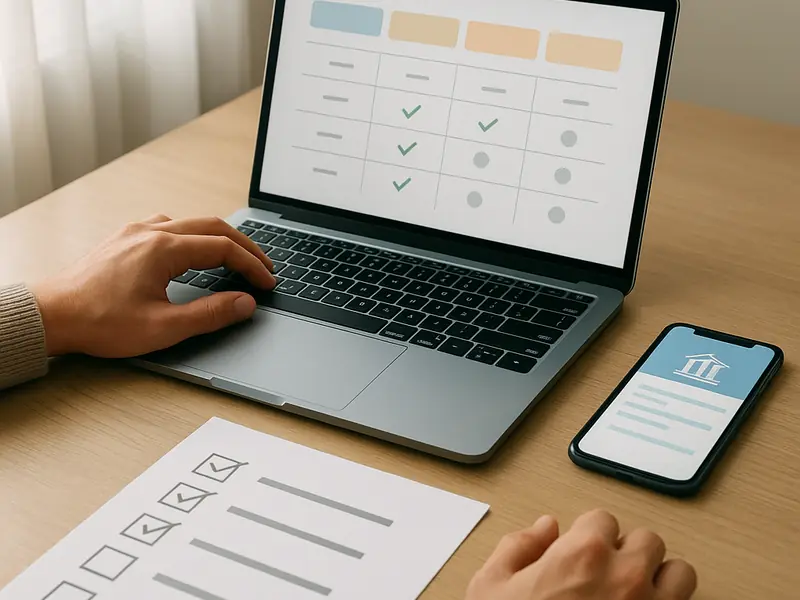
  • Compare on a like-for-like basis. For each option, note monthly fees, waivers, ATM access, overdraft rules, transfer speeds, and app quality. Use the banks’ calculators or fee schedules to estimate monthly costs given your typical activity.
  • Read the fine print. Verify what counts toward waivers, what triggers overdraft charges, and any caps on ATM refunds or international usage.
  • Test the experience. If possible, open a basic account and try essential tasks: direct deposit setup, mobile check deposit, and transferring money to another bank. Ensure customer service response times meet your expectations.

Common model comparisons you’ll see in the market

How To Choose A Bank Account
  • Traditional banks with large branch networks typically offer easy access and a broad set of services. They often require a monthly fee to maintain the account, with waivers tied to direct deposits or minimum balances. Examples you’ll encounter include Chase, Bank of America, Wells Fargo, and Citibank. They tend to provide extensive ATM networks and plenty of branch staff but can vary on fee waivers and customer experience.
  • Online and neobank options often emphasize low or no fees and strong digital experiences. They can offer competitive savings APYs and intuitive apps, though they may have fewer physical locations. Look at options like Ally Bank for online checking with straightforward terms, SoFi for a combined checking and savings experience tied to a modern app, Chime for a fee-free mobile-first approach connected to partner banks, and AXOS Bank or Capital One 360 for digital access with a broad card and transfer ecosystem.
  • Hybrid options balance branch access with robust online features. These providers typically offer transparent fee structures and clear ministerial benefits for students, professionals, or families who want a mix of in-person help and digital management.

Practical steps to choose and open a bank account

  • Define your budget and payment rhythm. Decide how often you expect to get paid, how often you will pay bills, and whether you need overdraft protection. This helps determine if a simple checking-only setup will suffice or if you should pair it with a savings vehicle or a money market option.
  • Compare at least three viable accounts. Use official bank pages to confirm current waivers and any promotional offers for new customers. Be mindful of introductory terms that change after a short period.
  • Check the ATM and card policies. If you frequently withdraw cash, ensure there is convenient access without high fees. Understand replacement card timelines and any related charges.
  • Consider the long-term value. If you intend to keep savings in an account, prioritize higher APYs and easy transfer options. If you travel or work remotely, prioritize broad access, currency conversion ease, and customer support responsiveness.
  • Complete the sign-up and link external accounts. Gather typical documentation such as a government ID and proof of address. After opening, link an external bank account to enable easy transfers and automate savings or bill payments.

Examples of how to apply these ideas

If you want broad physical access, a traditional bank with many branches and a large ATM network could suit you, provided you can keep the monthly fee waived with direct deposit or a minimum balance. If you want a streamlined digital experience and lower costs, an online bank or neobank can offer strong app features, decent customer support through chat or email, and the potential for higher savings yields on related accounts. If you value both, you might pair a traditional account for in-person help with a high-yield online savings vehicle to optimize both liquidity and growth.

In practice, a thoughtful approach is to pick one primary checking option that fits your daily routine, partner it with a savings account that earns a sensible yield, and ensure both are FDIC insured. Review the terms yearly and be ready to switch if a better fee waiver or a superior app experience appears. The right pair should feel predictable, secure, and easy to use every day.

← Back to all articles